Clinical Trials
The Gastroenterology Research Unit at the University of Otago/Health New Zealand Te Whatu Ora Southern is dedicated to enhancing outcomes for individuals living with digestive and liver conditions. Based at Dunedin Hospital, our unit conducts clinical trials that evaluate new and emerging treatments, giving patients in the Otago region access to therapies that may not yet be available through standard care.
We are currently inviting expressions of interest from adults who have been diagnosed with one of the conditions listed below. Whether you are newly diagnosed or have lived with your condition for years, participating in clinical research is one way to contribute to better treatments for yourself and for future patients. Due to the nature of these trials, you will receive close monitoring and care.
There is no obligation when you register your interest. Our team will discuss available opportunities with you, answer your questions, and help you decide whether a particular trial might be suitable.

Inflammatory Bowel Disease (IBD)
Inflammatory bowel disease encompasses two main conditions: Crohn’s disease and ulcerative colitis. These are chronic disorders in which the immune system attacks the lining of the gastrointestinal tract, causing persistent inflammation. Symptoms commonly include abdominal pain, diarrhoea, fatigue, unintended weight loss, and rectal bleeding. IBD typically follows a relapsing and remitting course, meaning symptoms can flare unpredictably and then settle for periods of time.
Existing treatments—including biologic therapies, immunosuppressants, and corticosteroids—help many patients, a significant number do not achieve adequate disease control or experience side effects that limit long-term use. Clinical trials offer the possibility of accessing newer therapeutic approaches currently under investigation.
Primary Biliary Cholangitis (PBC)
Primary biliary cholangitis is a chronic autoimmune liver disease in which the body’s immune system gradually damages the small bile ducts within the liver. Over time, this can lead to bile accumulation, scarring (fibrosis), and progressive liver injury. Many people with PBC experience persistent fatigue and itch (pruritus), while others may have no symptoms at the time of diagnosis.
Current treatments can slow disease progression, but new therapies are needed to address symptoms that remain difficult to manage and to improve long-term outcomes. Research in this area is active, and our unit welcomes enquiries from people who have been diagnosed with PBC.
Adult Coeliac Disease
Coeliac disease is an autoimmune condition triggered by dietary gluten—a protein found in wheat, barley, and rye. In affected individuals, gluten consumption causes the immune system to damage the villi of the small intestine, impairing nutrient absorption. Symptoms vary widely and can include bloating, diarrhoea, anaemia, fatigue, and bone pain, though some patients have few obvious digestive symptoms.
A strict gluten-free diet is currently the only established treatment. However, adherence is difficult, inadvertent exposure is common, and some patients continue to experience symptoms and intestinal damage despite dietary vigilance. Emerging research is exploring new therapeutic options that may complement or reduce reliance on dietary restriction alone.
Clinical trials are carefully regulated research studies that test whether new treatments are safe and effective. Every approved medicine available today was once tested in a clinical trial. By participating, you contribute directly to the development of therapies that may benefit you and others living with similar conditions.
Potential Benefits
• Access to new treatments that are not yet publicly available, at no cost to you.
• Close, personalised monitoring by specialist gastroenterologists and experienced clinical trial coordinators throughout the study.
• Reimbursement for study-related travel and associated expenses.
• Regular health assessments, including blood tests and clinical examinations, as part of your participation.
• The opportunity to support gastroenterology research in Aotearoa New Zealand and contribute to improved outcomes for future patients.
Your Rights as a Participant
Participation in any clinical trial is entirely voluntary. You are free to withdraw at any time, for any reason, without affecting your standard medical care. Before enrolling, you will go through a comprehensive informed consent process in which the study team explains the trial’s purpose, procedures, potential risks, and benefits. You will have the opportunity to ask questions, discuss the trial with your family or whānau, and take as much time as you need to make your decision.
All clinical trials conducted at our unit are reviewed and approved by an independent ethics committee, which ensures that participant safety and wellbeing are the highest priority.
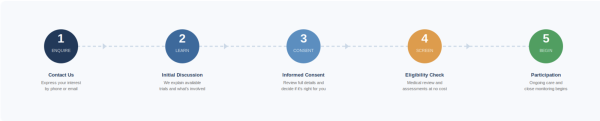
Step 1: Contact Us
Get in touch by phone or email to let us know you are interested. We are happy to answer any questions you may have.
Step 2: Initial Discussion
A member of our clinical trials team will talk you through what trials are currently available and whether any might be suitable for your situation. This conversation is informal and confidential.
Step 3: Informed Consent
If you decide you would like to proceed, you will receive a detailed information sheet about the specific study. Our team will walk you through this document, explain everything in plain language, and give you time to consider your options. You may wish to bring a support person or family member to this discussion.
Step 4: Screening and Eligibility
Once you have provided your consent, the study team will carry out medical assessments—such as blood tests, physical examinations, and a review of your medical history—to confirm whether you meet the eligibility requirements for that particular trial. All screening procedures are provided at no cost.
Step 5: Participation
If you qualify, your active participation begins. The research team will guide you through every step, including how often you need to attend the clinic, what procedures are involved, and what to expect day to day. Your health and safety are monitored closely throughout.