News
The Myeloid Makeover: Turning Resistance into Response.
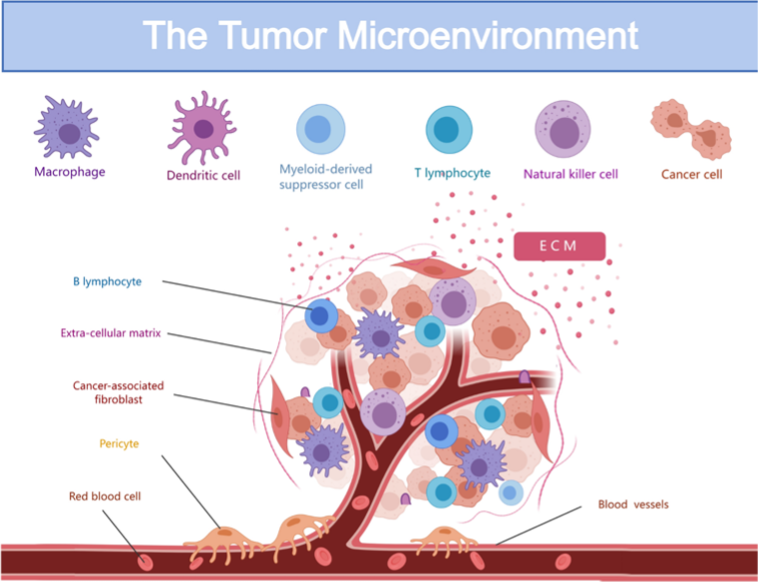
The immune response is one of the most important factors that determines how patients respond to cancer. Immunotherapies represent an exciting opportunity to reinvigorate a patient’s immune system to destroy cancer cells. However, solid tumours such as colorectal cancer show variable outcomes, likely due to complex cell interactions within the tumour microenvironment (area within and surrounding the tumour).
Anti-PD-1 monoclonal antibody therapy aims to block the Programmed Death pathway of CD8+ T cells within the tumour and promote the anti-tumour immune response, however myeloid cells such as macrophages and myeloid-derived suppressor cells can promote a continually immunosuppressive environment and therefore promote tumour growth.
A recent study conducted by Mestrallet et al. 2026 has demonstrated that by reprogramming immune cell interactions within the tumour they could overcome immune resistance. The authors targeted TREM2+ macrophages using a combination of anti-LAG3, anti-CTLA-4 and anti-PD-1 to reprogram the tumour microenvironment of BALB/c mice and achieve up to 100% tumour clearance in mismatch-repair deficient cancers and >70% win mismatch repair-proficient models.
This study represents an emerging avenue of immunotherapies and highlights the role of myeloid cells in the success or failure of immunotherapy in colorectal cancer.
For more information:
https://www.cell.com/cell-reports-medicine/fulltext/S2666-3791(26)00203-X
Image credit:
https://link.springer.com/article/10.1007/s12094-024-03697-w