News
Phase 1 Trial of Faecalibacterium prausnitzii Supports Microbiome Based Therapy in Crohn’s Disease
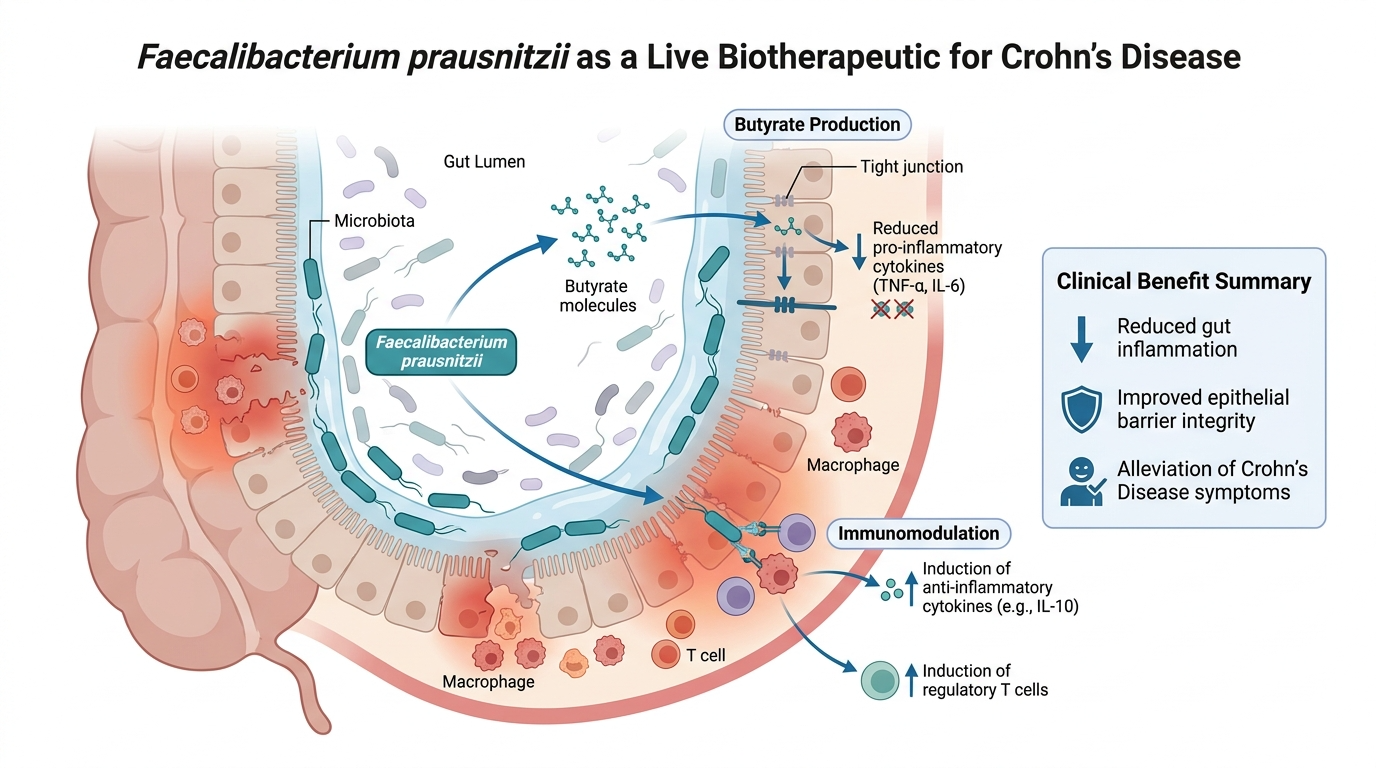
A new study published in Nature Communications reports the first human clinical evaluation of Faecalibacterium prausnitzii as a live biotherapeutic for Crohn’s Disease. F. prausnitzii is a dominant commensal bacterium in the healthy gut microbiome and is widely recognized for its anti-inflammatory and immunomodulatory properties. Reduced abundance of this organism has been consistently associated with intestinal inflammation, disease severity, and relapse risk in Crohn’s disease. In this Phase 1 trial, patients with mild to moderate Crohn’s disease received an oral formulation of a proprietary F. prausnitzii strain (EXL01), with the primary aim of assessing safety and tolerability.
The therapy was found to be safe and biologically active, with no major treatment-related adverse events reported. Importantly, molecular analyses revealed that treatment was associated with changes in ileal gene expression, including reduced activation of inflammatory and innate immune pathways and enhancement of metabolic pathways linked to epithelial homeostasis. These findings suggest that F. prausnitzii may exert therapeutic effects through modulation of host immune responses and restoration of intestinal epithelial function. Although the study was limited by small sample size and lack of a placebo control, it provides important proof-of-concept evidence supporting microbiome-targeted therapeutics as a novel treatment strategy for Crohn’s disease.
ClinicalTrials.gov registration: NCT05542355.
Guarino-Vignon, P., Louis, E., Pham, HP. et al. Faecalibacterium prausnitzii EXL01 for the Maintenance of Steroid-induced Clinical Response or Remission in Patients with Crohn’s Disease: a first in human trial. Nat Commun (2026). https://doi.org/10.1038/s41467-026-72375-y